
Today, I’m reflecting on the deep inequities baked into our tax system, and the risks posed by the so-called “One Big Beautiful Bill” (OBBB). On the surface, it promises tax relief and new investments, but underneath, it’s a recipe for higher national debt and a heavier burden on everyday Americans.
America was built on the idea that everyone deserves a fair shot, a place where hard work, community, and compassion lift us all up. But today, it feels like those promises are slipping through our fingers. Let’s take a closer look at the Big Beautiful Bill and the tax system that shape our daily lives.
Fiscal responsibility they yell, as they raise the debt, increase taxes for the 90%, and cut taxes for the 1%. “Make America Great Again”… Compared to what?! The 1950s are often held up as the golden age, but is this bill really going to make us like the 1950s, or even make us great?
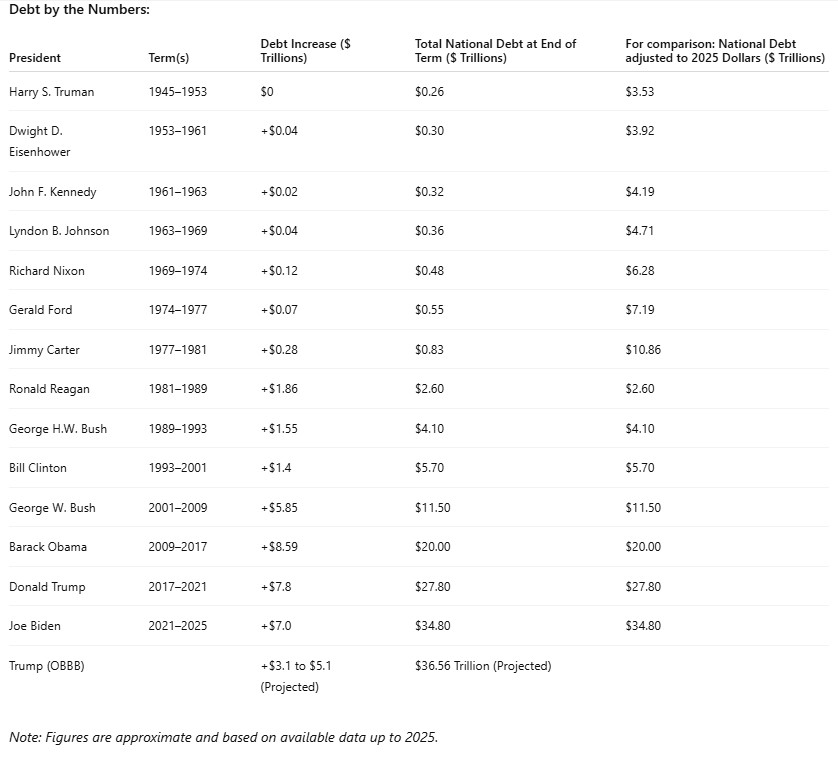
Here is the National dept by year:
While thinking about the two big problems: the unfair tax policy and the so-called “One Big Beautiful Bill.” I realize they aren’t really separate issues at all. They’re deeply connected: and together, they show us how the system works against everyday Americans like you and me.
The Big Beautiful Bill (OBBB) is being sold as a win for everyone, but let’s look at the facts:
- It would add $3.1 to $5.1 trillion to the national debt, pushing our debt to nearly $36.5 trillion by the end of 2025.
- Interest payments alone could soon top $600 billion annually. Money that could otherwise support schools, hospitals, and essential services.
- And who’s getting the biggest slice of the pie? It’s the 1%, whose tax breaks and special provisions leave the rest of us (the 99%) to pick up the tab.
And here’s what the bill is taking away from the poor and middle class:
- Cuts to social programs: like Medicaid, food assistance (SNAP), and housing support. Leaving families to struggle for basic needs.
- New work requirements: targeting people already stretched thin, caring for children, elderly, or sick family members.
- Tax changes: shifting more of the burden to middle-income families, while the wealthiest get even more breaks.
But that’s only half the story.
Our tax system itself is already tilted in favor of the wealthy. The top 1%:
🔹those earning over $663,164 per year, pay an average of 26.1% of their income in federal taxes. 🔹the 99% pay 21.1% on average. At first glance, that seems fair—maybe even progressive.
- A family earning $50,000 pays about $10,550 in taxes. That’s 21% of their income, leaving $39,450 for rent, groceries, and everything else.
- A millionaire paying 26% still has $739,000 left over, plenty for investments, vacations, and luxuries.
- And billionaires? They often pay an effective federal tax rate of just 8.2%. Most of their wealth grows through investments, which are taxed at lower rates, or not taxed at all until sold.
So here’s the connection:
👉 The Big Beautiful Bill and our tax system are both built on the same foundation: they let the wealthiest Americans benefit the most, while the rest of us shoulder the burden.
We need to rethink our priorities. What most Americans agree are American values. Most of us want to:
✅ Care for the weak and sick.
✅ Help the poor get a foot up.
✅ Feed the hungry.
✅ Protect our great nation.
✅ Preserve the right to vote, equal protection under the law, freedom of religion, freedom of assembly, and freedom of speech.
✅ Ensure high-quality, affordable healthcare.
✅ Acknowledge the reality of climate change.
✅ And yes, most of us believe in a soul, a spirit, or something beyond the natural world.
To “Make America Great Again,” we must stop giving tax breaks to billionaires and millionaires, and make sure the 99% have a fair shot at a decent life.
It’s time to remind ourselves that we (the 99%) are the true strength of this nation. When we stand together, our voices can change laws, challenge injustice, and build a fairer future. Let’s rise, speak out, and claim the America we believe in. Let’s make America truly great for everyone.
That means calling our senators and demanding:
• A NO vote on the Big Beautiful Bill unless it truly serves the 99%.
• Real tax reform that makes the wealthy pay their fair share.
• Investments in services that lift us all, not just the wealthiest few.
Our voices matter. Let’s use them.
LINK to: Search for your congress people using your address or zip code.
Full address gives better response.
Contact information for the Whitehouse:
1600 Pennsylvania Ave., NW Washington, DC 20500
Phone: (202) 456-7041

REFERENCES:
📊 National Debt and Interest Payments
- Projected Increase from the One Big Beautiful Bill (OBBB): The OBBB is estimated to add between $3.1 trillion and $5.1 trillion to the national debt over the next decade, depending on whether temporary provisions are extended. CRFB+1stevenrattner.com+1
- Current National Debt: As of May 2025, the U.S. national debt stands at approximately $36.2 trillion. USAFacts+2Midland Daily News+2Investopedia+2
- Interest Payments: The federal government is projected to spend $684 billion on interest payments for the national debt in 2025. USAFacts+8FiscalData+8FiscalData+8
💸 Tax Rates and Income Distribution
- Top 1% Tax Rate: Taxpayers with an adjusted gross income (AGI) over $663,164 (top 1%) paid an average federal income tax rate of 26.1%. Tax Foundation
- Bottom 50% Tax Rate: Taxpayers earning under $46,637 (bottom 50%) faced an average federal income tax rate of 3.3%. Visual Capitalist+5Tax Foundation+5Tax Foundation+5
- Billionaires’ Effective Tax Rate: The wealthiest 400 billionaire families in America paid an average federal individual income tax rate of just 8.2% between 2010 and 2018. The White House
🏥 Social Program Cuts and Work Requirements
- Medicaid and SNAP Cuts: The OBBB includes significant cuts to Medicaid and the Supplemental Nutrition Assistance Program (SNAP), which could lead to millions losing access to these essential services. New York Post+3Houston Chronicle+3The Guardian+3
- Work Requirements: The bill proposes new work requirements for Medicaid recipients, mandating at least 80 hours per month of work, volunteering, or education to maintain eligibility. Commonwealth Fund+4CBS News+4Ballotpedia+4